Year
2018
Client
Avianca by Accenture
Role
Visual Designer and Visual Design Lead
Design Team
+10 Interaction and Visual Designers
Project Duration
4 months (Website), 2 months (Booking Flow)
Link
Project Name
Avianca Airlines
Description
As one of South America’s largest airlines and Colombia’s most established brands, Avianca needed a digital presence capable of supporting its next stage. The website became a key part of a five-year strategy, developed as the airline approached its 100th anniversary and advanced a broader digital transformation with Accenture.
Redesigning Avianca.com brought together product strategy, user experience, visual design and systems thinking within a major digital transformation. The work combined a robust design system with a rigorous UI process across the phases of Design Thinking. Fjord’s multidisciplinary team collaborated with a newly formed local design team, including me, to align interaction patterns, visual language and shared principles across a complex product ecosystem. The experience shaped my understanding of how design systems and multidisciplinary collaboration operate at scale.
Results
15% year-on-year digital sales growth via Avianca’s direct digital channels (compared to 4% growth across other company channels).
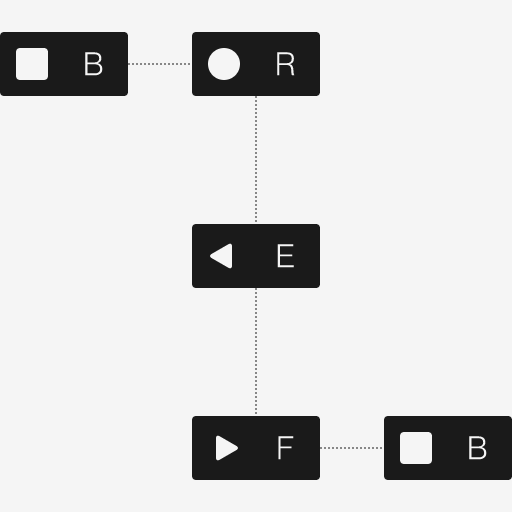
The Design Process
Our design work was based (B)* on the vision developed by Fjord during a Discovery phase. Then, working as an embedded consultancy team on-site with Avianca near the airport (R)*, we used rapid ideation (E)* to develop and test ideas (F)* internally along with the client. Decisions were documented (B)* as the work moved across phases, creating continuity between local and international teams.
By transferring methods throughout the engagement, the consultancy also helped strengthen Avianca’s internal design capability to maintain and extend the experience.
*Based on the ideas from Alejandro Masferrer’s “Design of Creative Processes”.
Responsive and mobile-ready structure and behavior
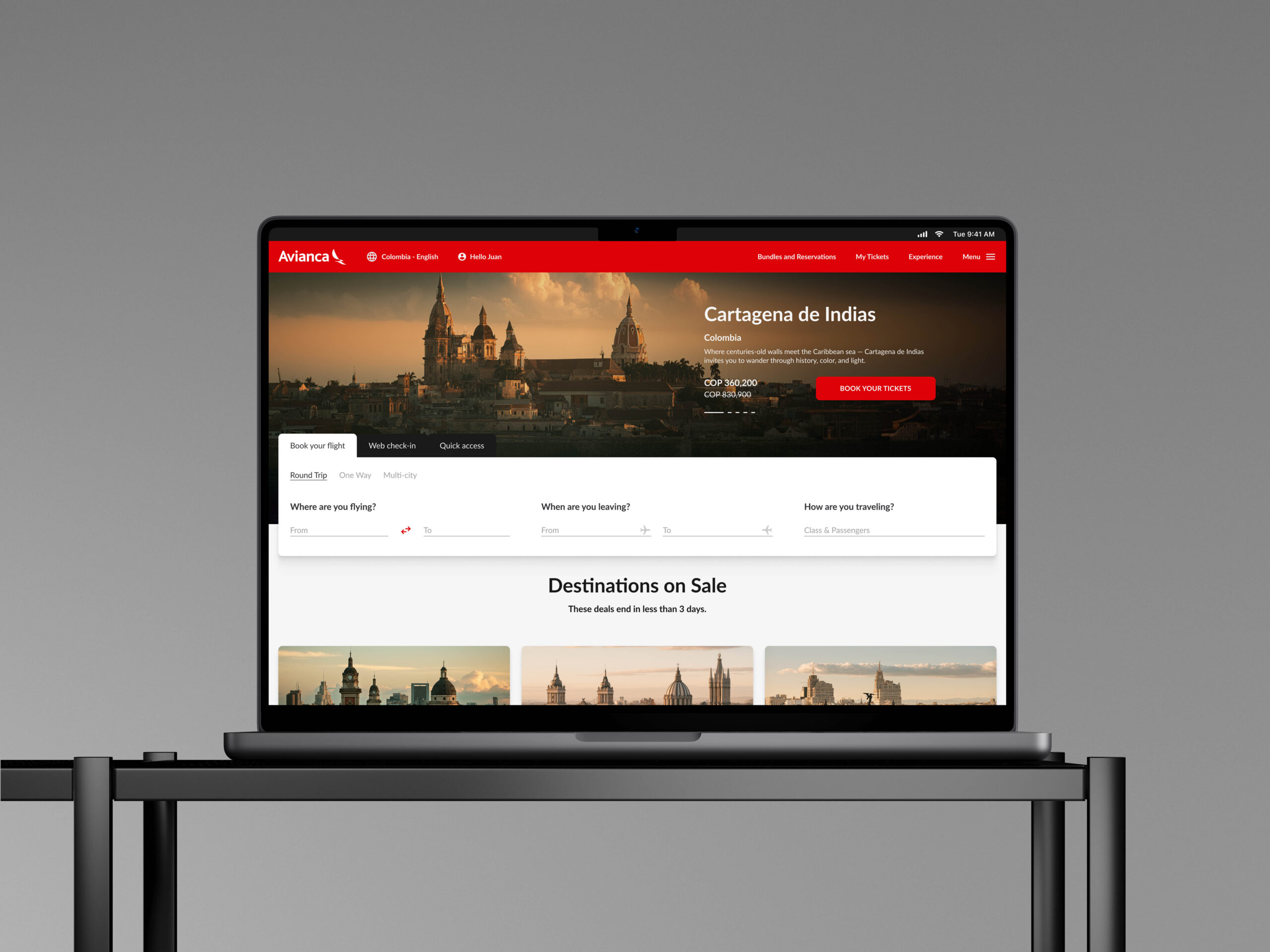
The new Avianca.com was designed as a fully responsive experience, allowing customers to search, plan and book flights seamlessly across desktop, tablet and mobile. By 2017, Avianca’s existing website was not fully optimized for mobile, creating friction in a critical commercial journey and limiting the effectiveness of an increasingly important sales channel.
The redesign addressed this gap by making mobile a core part of the experience and establishing a more consistent, device-agnostic booking journey.

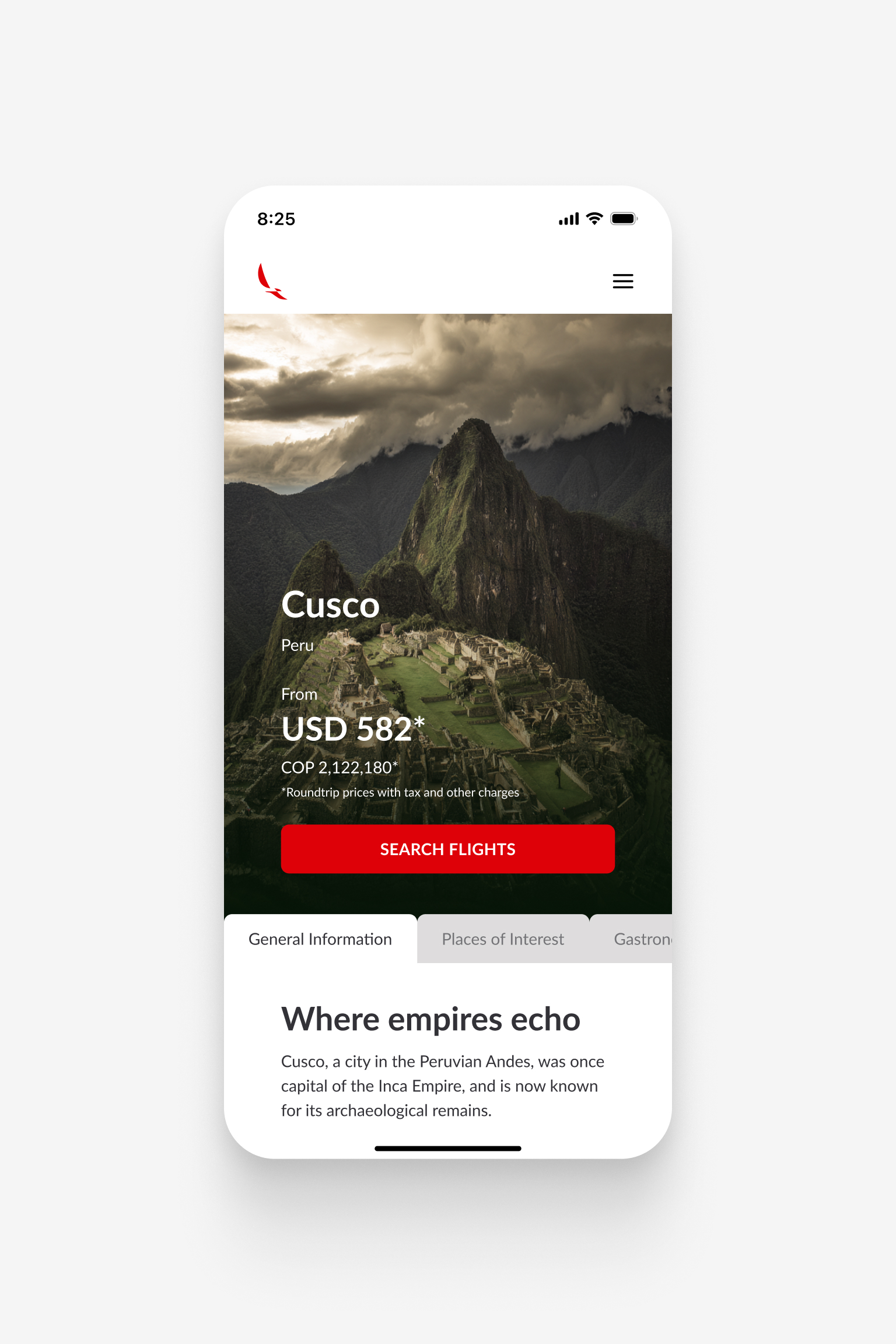
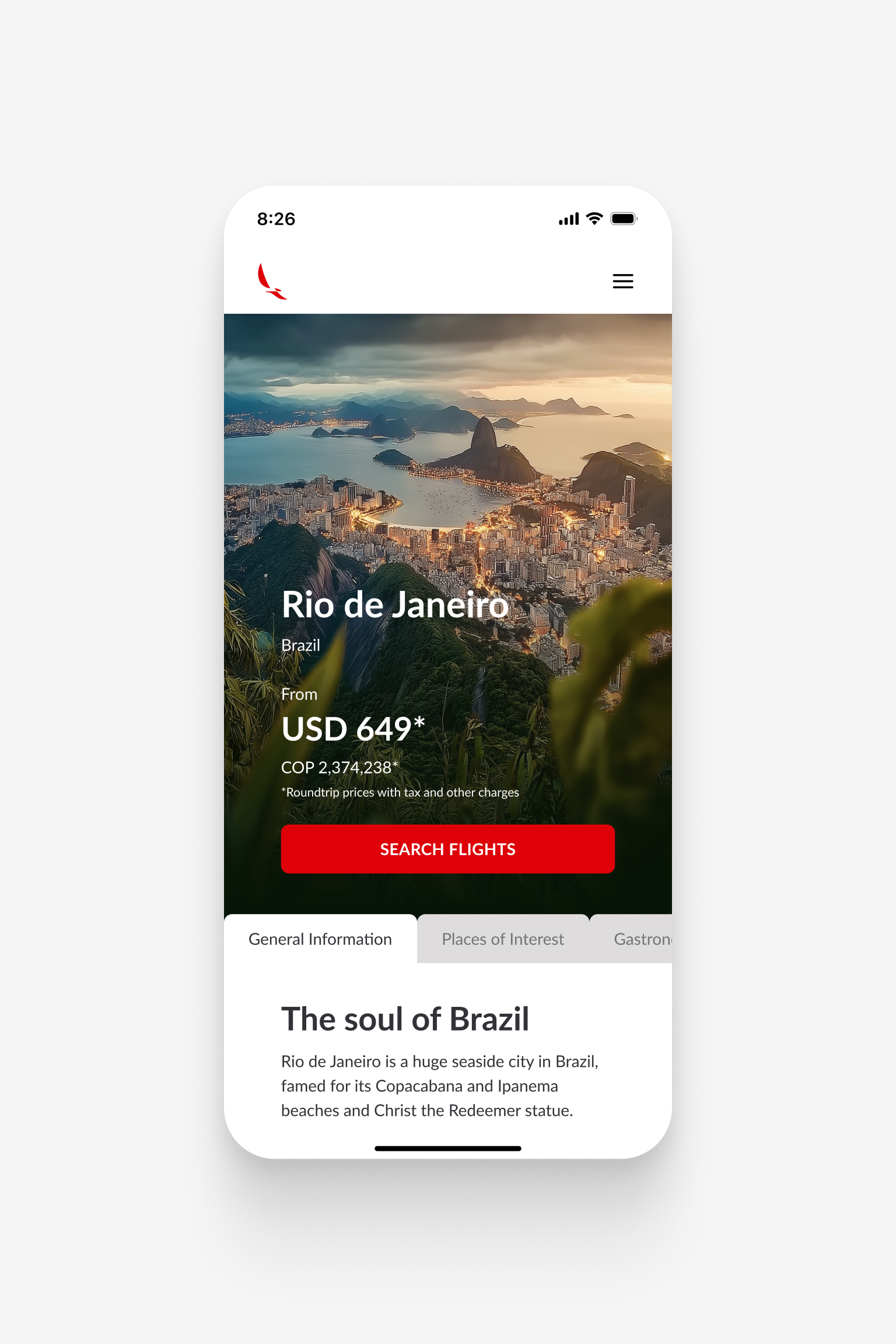
Inspirational image and content for users in exploration mode
The experience also used destination-led imagery and editorial content to create a stronger emotional connection with travel. Rather than functioning purely as a transactional booking platform, Avianca.com was designed to inspire exploration through evocative photography, destination highlights and contextual content.
This approach helped connect the practical task of planning a trip with the broader desire to discover new places, making inspiration an integral part of the digital journey.
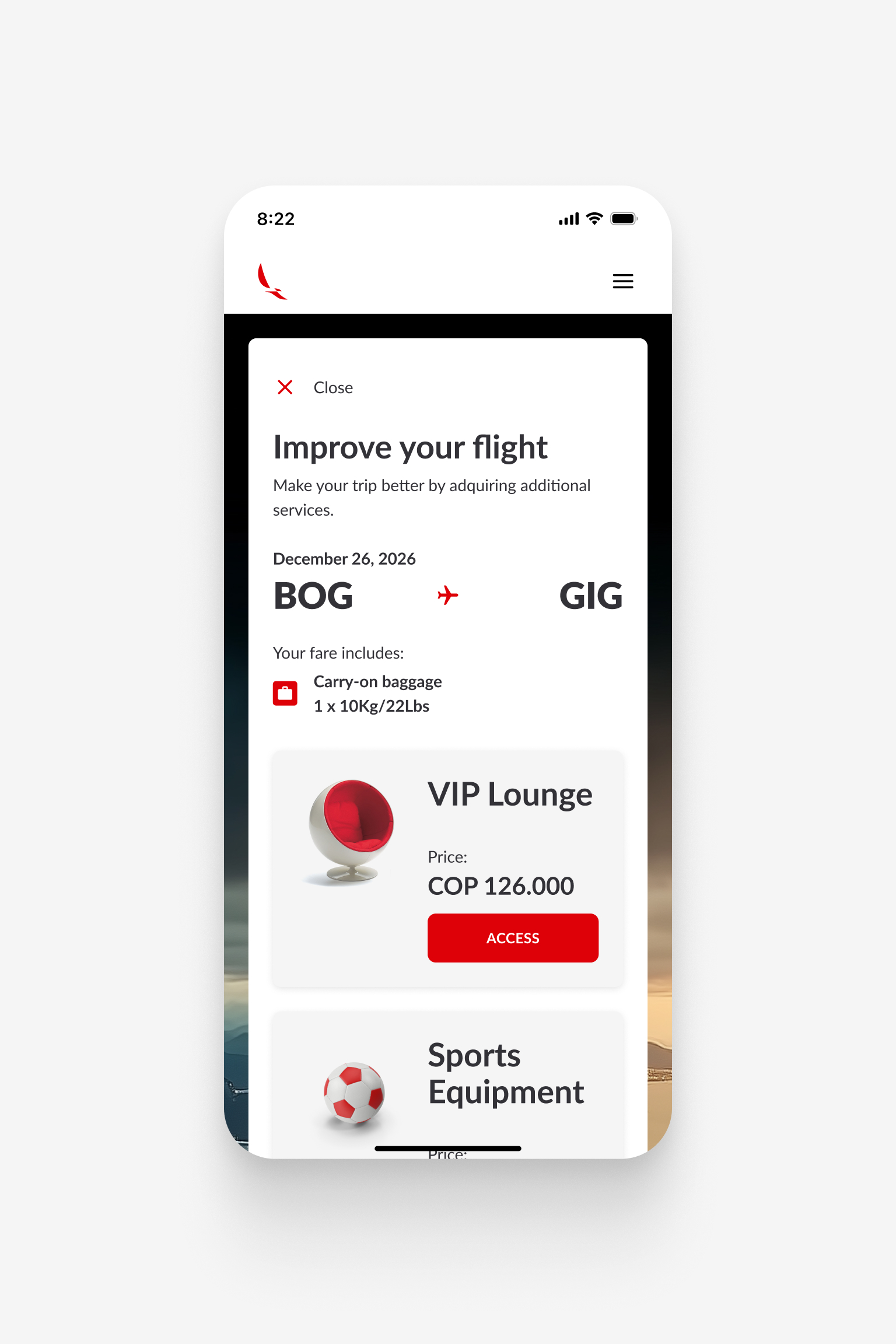
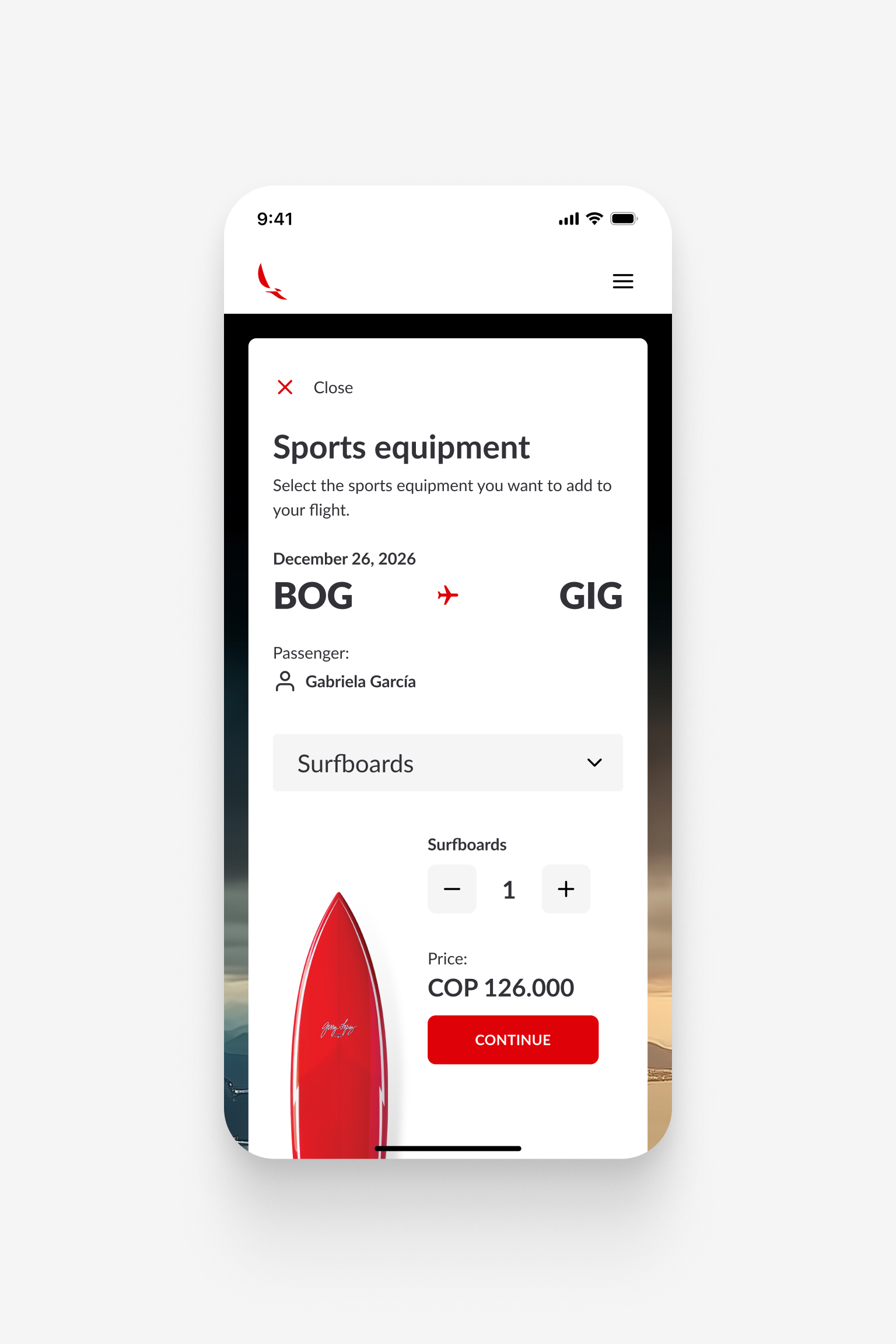
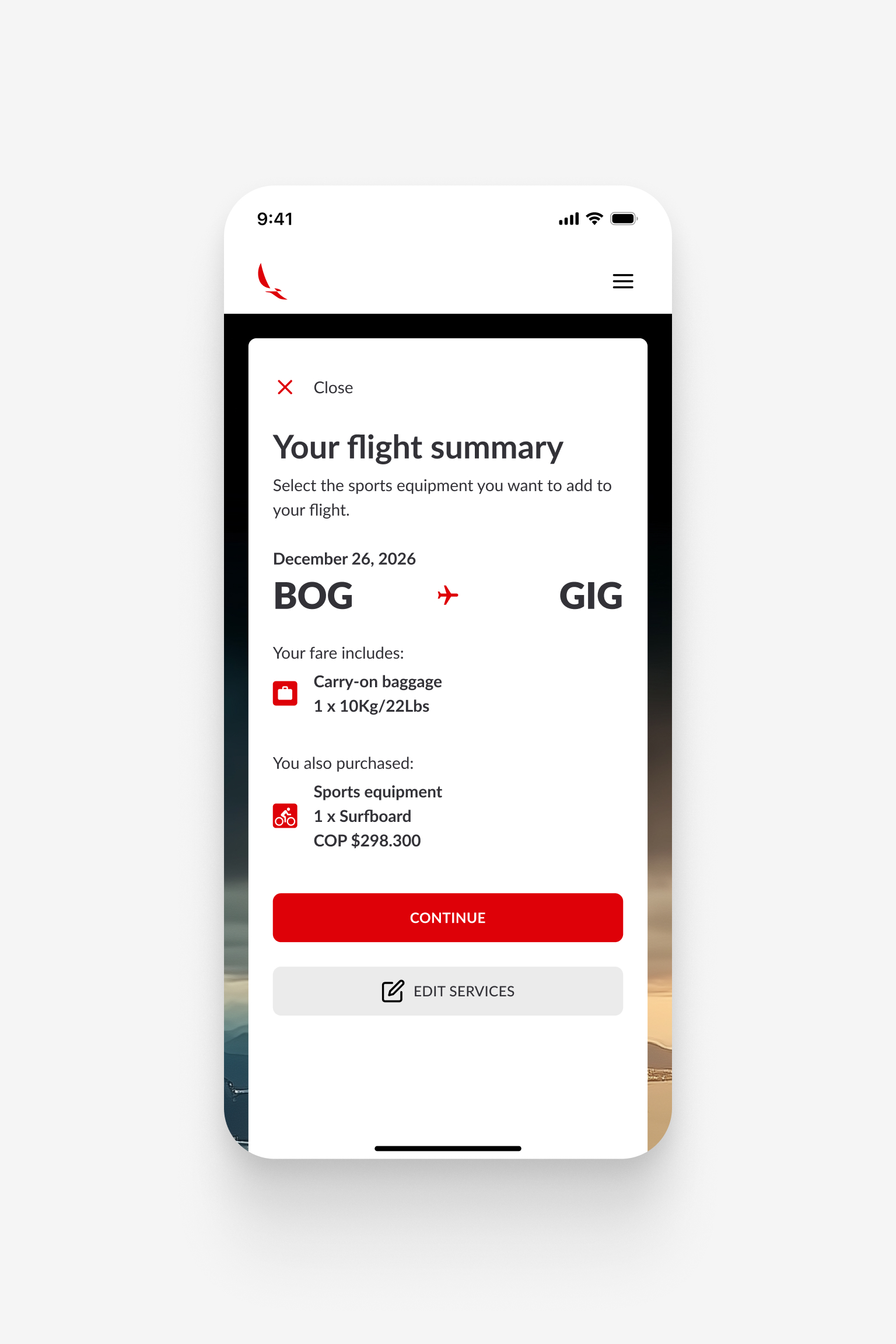
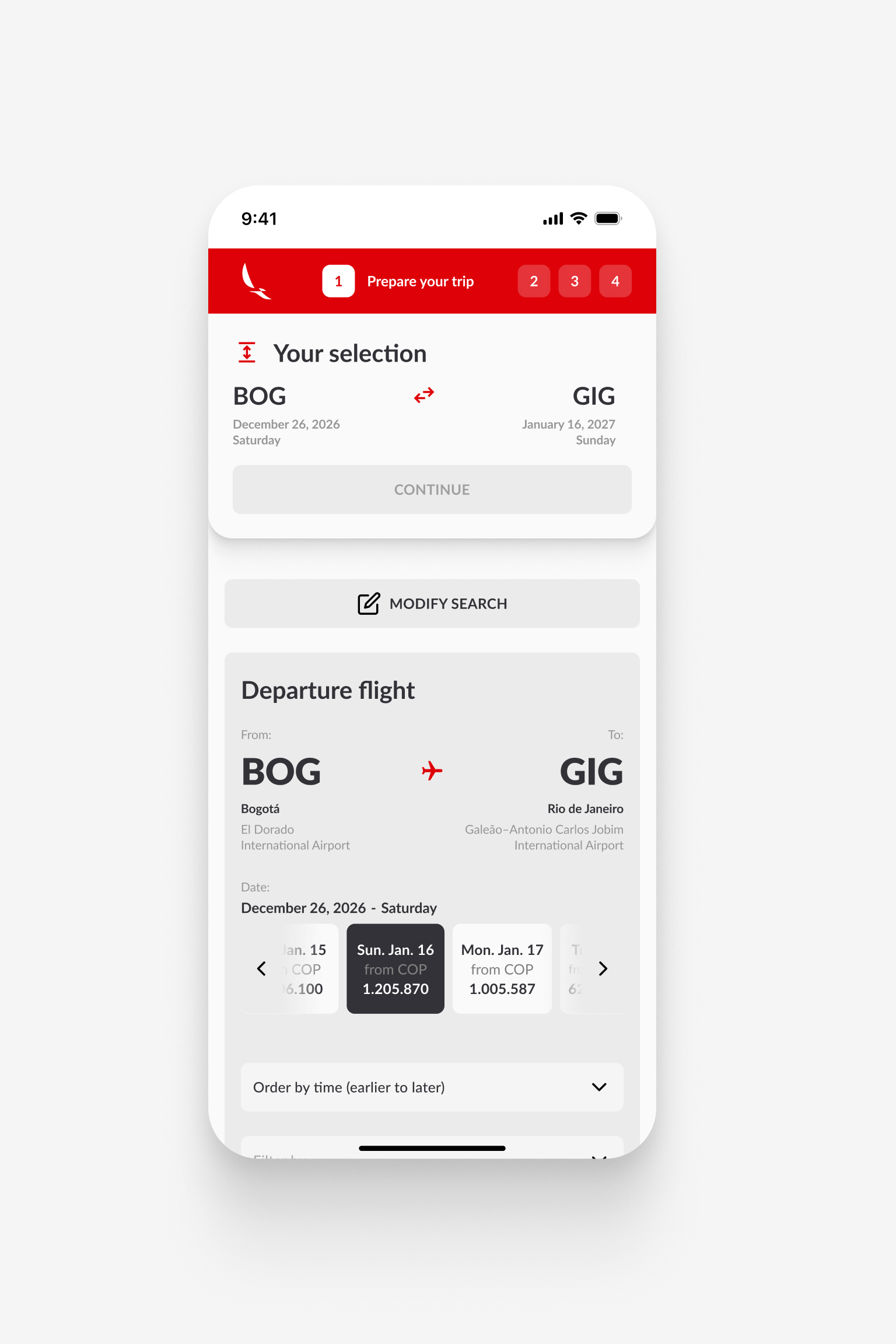


Rebuilding a revenue-critical booking journey
Avianca’s booking flow was a revenue-critical weakness: outdated patterns, legacy constraints and no responsive behavior created friction, particularly on mobile.
The first redesign phase addressed this high-impact journey without changing the underlying structure; only CSS and the visual layer could be redesigned. Within those limits, we improved clarity, hierarchy and responsiveness, creating a stronger booking experience and a foundation for subsequent iterations.
Credits and Resources
Teams
Fjord
Jakko Tamela (Design Director), Tim Harris (Service and Interaction Design Manager), Daniel García (Visual Designer), Zeb Reynolds (Visual Designer), Thassya Macedo (Service and Interaction Designer), Diego Carucci (Service and Interaction Designer), Gabriel Gómes (Service and Interaction Designer).
Accenture Interactive
Sergio Martínez (Service and Interaction Design Manager), Carolina Gutierrez (Service and Interaction Design Manager), Javier Quesada (Service and Interaction Designer), Natalia Restrepo (Service and Interaction Designer), Juanita Pardo (Service and. Interaction Designer).
Resources and Tools
Fonts
Lato, Google Fonts. Designed by Łukasz Dziedzic. https://fonts.google.com/specimen/Lato
Tools
Sketch. https://www.sketch.com
Zeplin. https://zeplin.io
Invision. https://www.invisionapp.com
Adobe Illustrator. https://www.adobe.com
Adobe Photoshop. https://www.adobe.com
Lessons Learned
Design Operations
Shape the environment to elevate the output.
The physical and digital workspace directly influences the quality of a team's output. As a design leader, it is essential to proactively advocate for an environment that supports the process — whether that means reconfiguring a room for collaborative workshops or making artifacts visible across shared surfaces. When the default setup creates friction, it is our responsibility to reshape it. The results will speak for themselves.
Leadership
Document decisions with clarity and precision.
In complex, cross-functional programs involving multiple design streams and stakeholders, insights and decisions can easily be lost in the pace of collaboration. Strong design leadership requires disciplined documentation — capturing ideas with clarity, specificity, and intent so they become actionable artifacts rather than fleeting observations.
Made with Semplice
Contact
If you want to get in touch, just reach out on any of the following:
© 2027 Juan Piñeres